A recreational marathon runner targeting a sub-3-hour performance presents with a history of IT band syndrome and a tibial stress fracture, both on the right side. Although back in training, the goal is to assess movement quality and identify any residual deficits that could impact performance or increase re-injury risk.
Watch the video of this use case 🎬
Key Findings
An incremental speed test combined with biomechanical analysis revealed several important patterns:
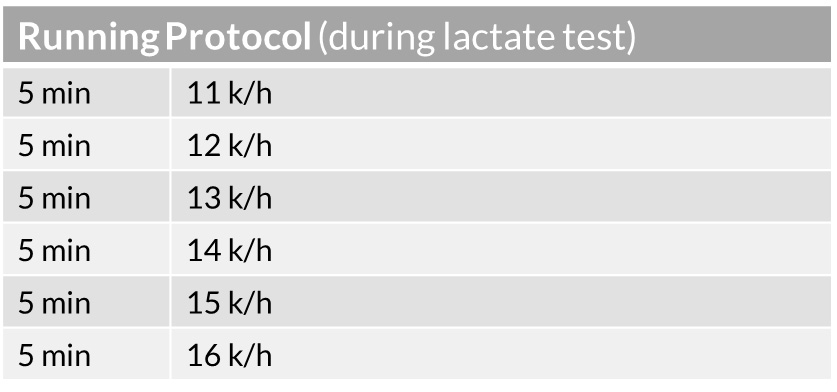
Running protcol incremental speed test
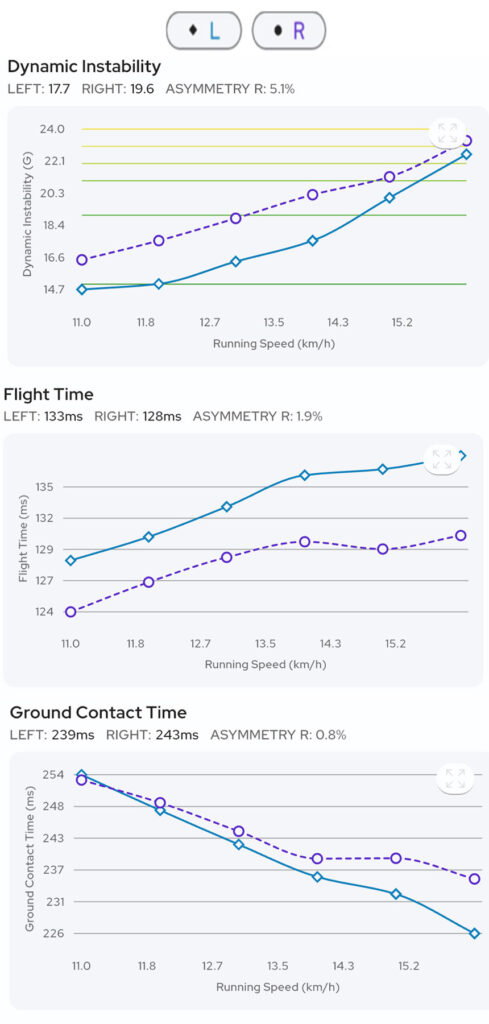
Higher impact loading and poor shock absorption, particularly on the right leg
Persistent dynamic instability on the right side, supported by visible hip drop and compensatory upper body movement
Reduced force production on the right leg, indicated by lower flight times
Limited reactivity at higher speeds, with ground contact time no longer decreasing on the right side
Incremental speed data of dynamic stability, flight time & contact time
Additional testing provided deeper insight into underlying causes:
Good double-leg reactive strength, but poor single-leg performance, likely due to instability
Mediolateral control deficits during jumping tasks
Reduced core control, especially in sagittal plane stability
Clear strength deficits on the right side, particularly in the calf and posterior chain
Main Takeaway
Despite acceptable overall performance, significant side-to-side asymmetries and capacity deficits persist. These are most evident under higher loads and single-leg demands, and align with the athlete’s injury history.
Next steps
Intervention should focus on building a stronger and more stable foundation before progressing to performance:
Improve single-leg strength and capacity, especially on the right side
Target dynamic and reactive stability, particularly in the frontal plane
Address core control deficits to support running mechanics
Progress toward reactive and plyometric training once capacity is restored
A combined approach of running analysis and targeted testing allows for precise identification of limitations and more effective, individualized training progression.
Share
Runeasi is an AI-driven, wearable 3D gait analysis technology designed to optimize running performance and reduce injury risk for athletes of all levels.
Runeasi is an AI-driven, wearable 3D gait analysis technology designed to optimize running performance and reduce injury risk for athletes of all levels.