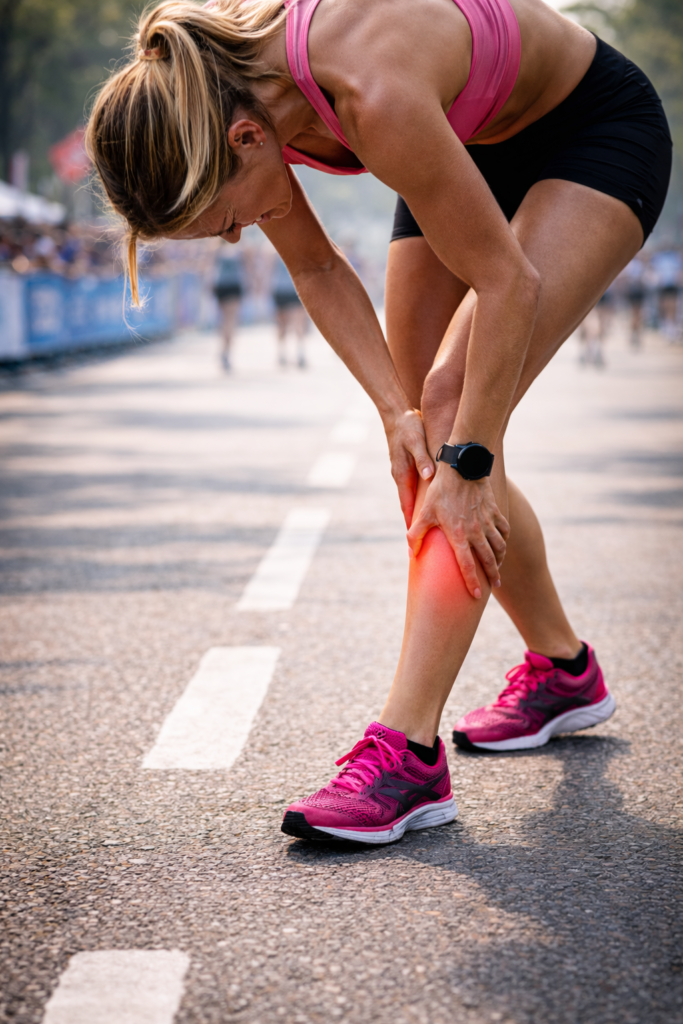
This case follows a high-level endurance runner returning to training after a right tibial stress fracture. While pain-free and progressing well, the focus goes beyond symptoms to assess movement quality, loading patterns, and potential compensation strategies during both jumping and running.
Watch the video of this use case 🎬
Key Findings
Initial jump testing showed generally good performance, with acceptable reactive strength and spring efficiency. However, a clear asymmetry emerged in dynamic stability, with the injured (right) leg showing increased instability.
During running analysis, this instability persisted and was accompanied by several important patterns:
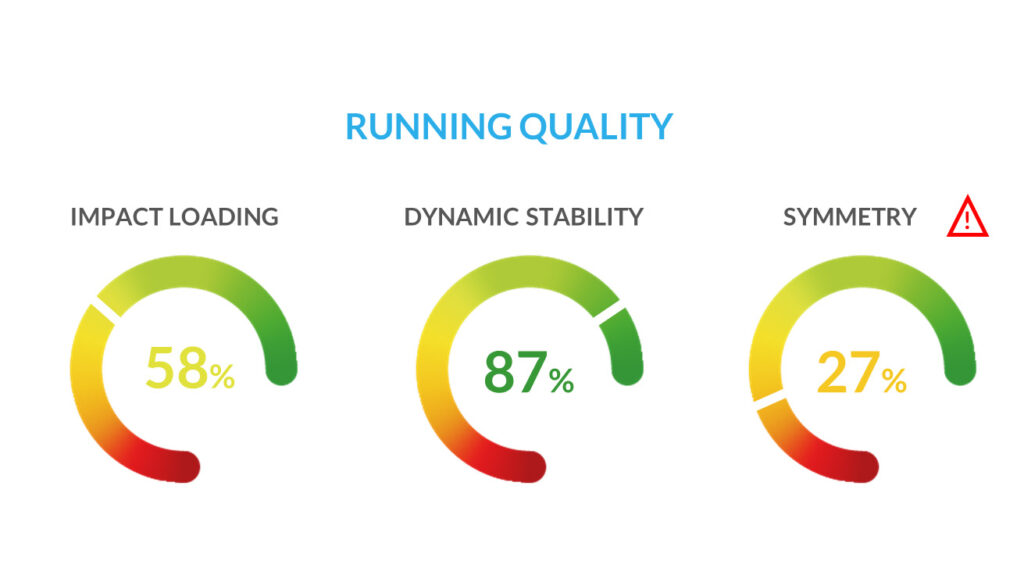
- Lower impact loading on the right leg, despite similar shock absorption
- Shorter ground contact time, suggesting reduced time spent loading the injured limb
- Increased asymmetry between left and right sides
- A highly reactive, aerial running style, leading to more distal (calf/ankle) loading
Together, these findings point toward a protective offloading strategy, where the runner subconsciously avoids fully loading the injured leg.
Main Takeaway
Even when athletes are pain-free, underlying compensations can remain. In this case, reduced loading and increased instability on the injured leg may increase the risk of re-injury, especially given the link between instability, non-vertical loading, and tibial stress.
Conclusion & next steps
The priority is to restore symmetry and control, rather than just performance. Key interventions include:
- Improving dynamic stability on the injured side
- Gradually increasing loading tolerance through controlled impact exercises (e.g., jumps, landings)
- Monitoring left-right symmetry in both jumping and running
- Ensuring a more balanced impact loading profile during running
Ongoing monitoring is essential to confirm that compensation patterns resolve as training load increases.