
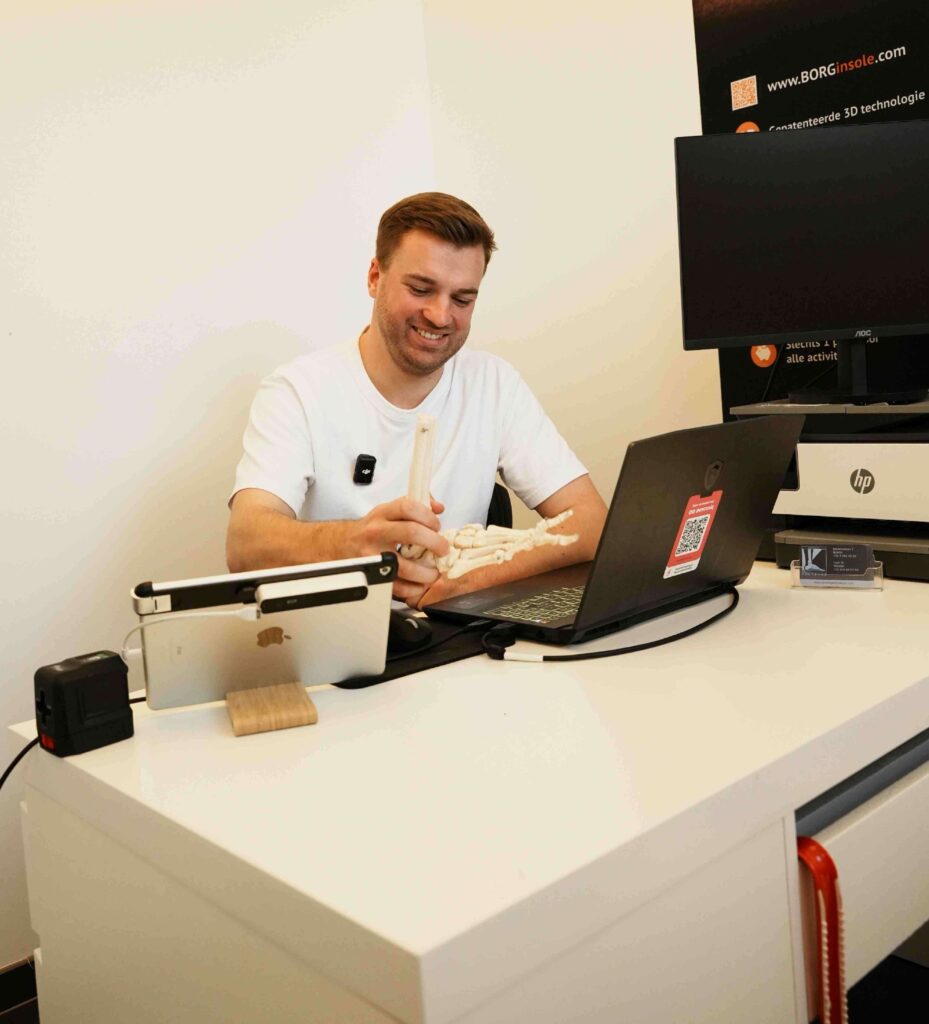
A highly active recreational runner and healthcare professional presented to sports podiatrist Koen Eelen with persistent left hip pain during and after running. Symptoms had been present for 2–3 months and were accompanied by morning stiffness and discomfort following training sessions. Despite regular training, general strength exercises, and previous treatment attempts, the symptoms continued to return.
Initial Assessment
The athlete underwent a comprehensive biomechanical assessment combined with a Runeasi Running Analysis. During the clinical examination, the podiatrist identified several factors that could be contributing to the recurring symptoms.
Key clinical findings
- Increased tension around the tensor fascia lata
- Mild leg length discrepancy
- Left anterior pelvic rotation
- Bilateral hip instability
- Compensatory elevation of the left shoulder
- Worn running shoes with reduced shock absorption
The running analysis provided further insight. The athlete achieved a Running Quality Score of 38 while wearing their current shoes and 42 when running barefoot. The higher barefoot score suggested that the existing footwear was contributing to the problem rather than supporting the athlete effectively.
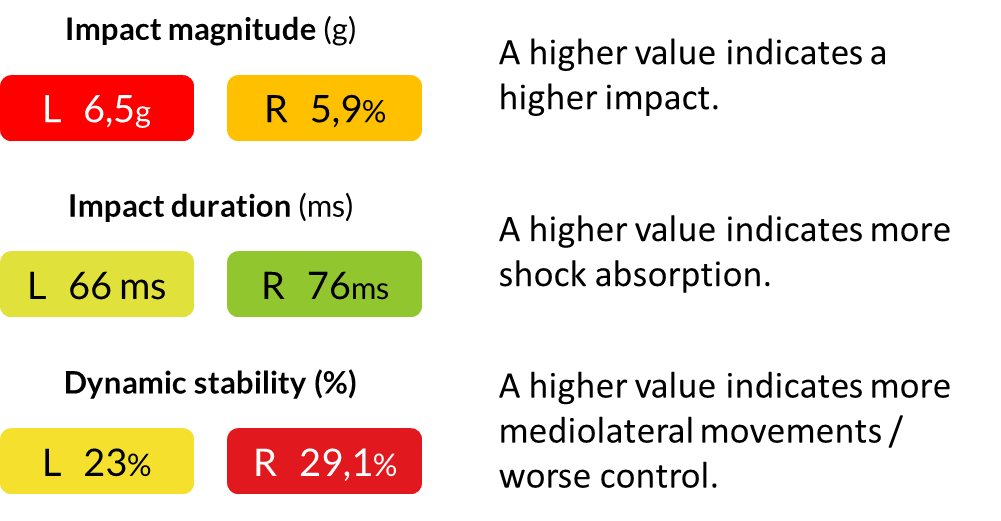
The movement data revealed a broader compensation pattern rather than a localized injury.
Major observations
- Poor dynamic stability
- Increased impact loading on the left side
- Reduced shock absorption
- Clear left-right asymmetries
- Compensatory movement strategies throughout the kinetic chain
The podiatrist concluded that instability on one side was increasing loading on the opposite side, eventually leading to overload around the left hip during running.
Intervention
Based on these findings, treatment focused on addressing the underlying movement dysfunctions rather than simply reducing symptoms.
The athlete first replaced the heavily worn running shoes with a more supportive model. To address the mild leg length discrepancy and reduce pelvic compensation, a 4 mm heel lift was introduced.
A targeted exercise program was then prescribed. Unlike the general strengthening exercises the athlete had previously been performing, the new program focused specifically on movement quality and stability.
The programme emphasised:
- Gluteus medius strength
- Single-leg stability and control
- Hip drop correction
- Core stability and trunk control
- Resistance band hip exercises
- Single-leg strength development
Manual therapy and osteopathic treatment were also used to address pelvic alignment and reduce compensatory tension patterns.
Eight Weeks Later
When the athlete returned for reassessment eight weeks later, both the clinical presentation and the running data had improved substantially.
Running Quality Score
- Pre-intervention: 38
- Post-intervention: 72
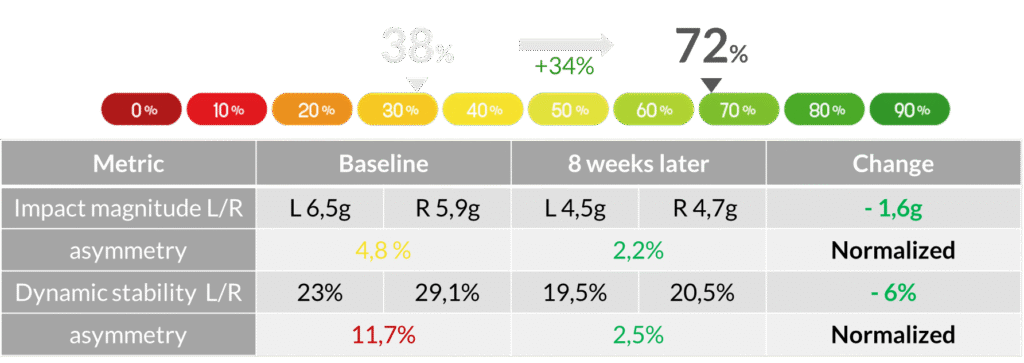
The follow-up analysis showed that the previously observed asymmetries had largely disappeared. Dynamic stability improved, impact loading became more balanced, and overall movement efficiency increased.
Key improvements
- Improved dynamic stability
- More symmetrical loading patterns
- Better shock absorption
- Reduced compensatory strategies
- Increased movement efficiency
Most importantly, the athlete reported a significant reduction in symptoms. While occasional discomfort still appeared after heavier training sessions, the persistent day-to-day hip pain had largely resolved.
Key Takeaway
One of the most interesting aspects of this case was that the athlete’s running technique appeared relatively normal during visual observation. However, the Runeasi analysis revealed subtle asymmetries and loading patterns that would have been difficult to identify with the naked eye alone.
By combining clinical assessment, objective movement analysis, and targeted rehabilitation, the podiatrist was able to identify the root causes of the athlete’s symptoms and implement an effective intervention strategy. Within eight weeks, the athlete achieved measurable improvements in running quality, movement efficiency, and pain levels.